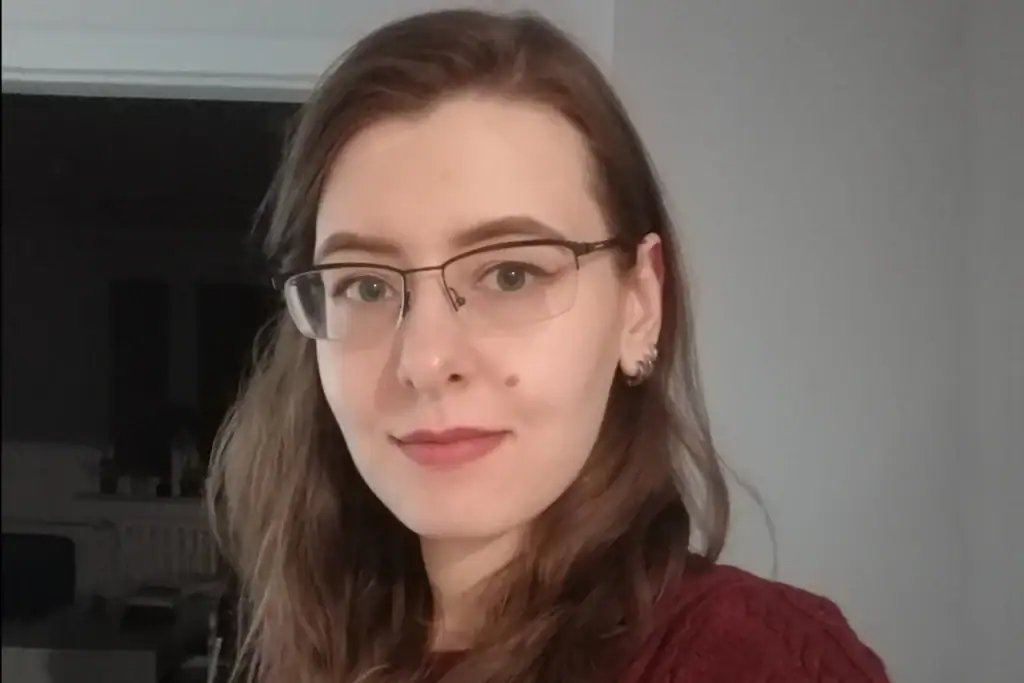
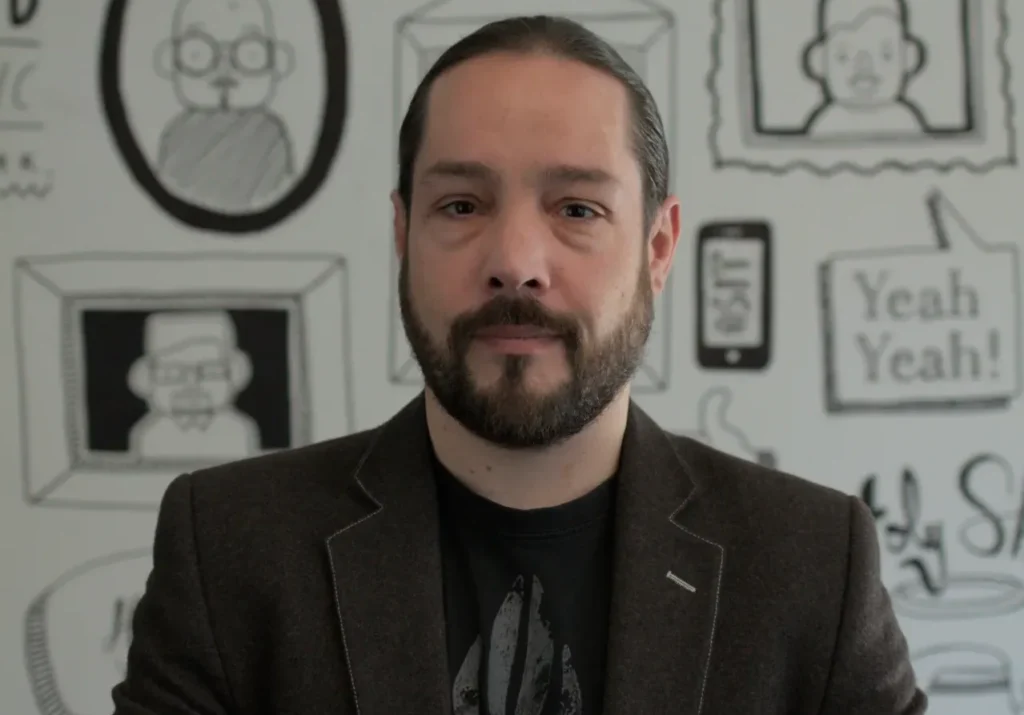
If you want to learn how to write complex characters, Yevgeny Blinov suggests starting with a kitten stuck in a tree — and watching who rescues it, who ignores it, and who shoots it with a fireball. He's a narrative designer and game designer with over six years in the industry, previously a screenwriter, with level design and quest design in the mix too: the rapidly changing realities of games and (usually) small teams meant wearing multiple hats, and he's grateful for every one. For Yevgeny, games are more than escapism or power fantasies — they are worlds, universes, different realities. He grew up seeking fantasy worlds to explore, learn and talk about; growing older only sharpened the urge to create such worlds himself. Not just create them — but let players create their own stories within them.
YB
This week's expert
Yevgeny Blinov
Narrative designer and game designer (6+ years), former screenwriter. Credits: Five Heroes, Solaria: Dawn of Heroes, Eden Falling; currently an unannounced 3D puzzle platformer, an unannounced RTS, and Solar Sails: Space Pirates. Also two short films, one screened at the NNF International Festival.
Tip 1 — Open with the promise of the experience
There are many ways to hook a player; which works best depends on what your audience came looking for. They came for an experience, right? Give them a taste of that experience at its peak level. A game about pirates hunting ancient treasure? Put them in front of the treasure and send a Kraken against them. A horror? Drop the hero into a dark dungeon filled with nightmares hunting them. A story-driven RPG? Have the hero defend a village from evil creatures. Give your audience a promise of the experience they'll have throughout the journey — and establish the story's anchor: characters, goals, conflicts, stakes, setting. The hook doesn't have to capitalize on the main character, by the way; it can introduce the antagonist, or the thing your story is about.
Tip 2 — Your plot will be interfered with. Collaborate anyway.
Ideally, plot derives from the main character's attempts to achieve their goals: encounter an obstacle, attempt, fail, learn, try again, succeed. But in game development — unless you're a solo indie dev — the plot doesn't depend on the writer alone. Learning curves, feature introductions, balancing, production constraints: you planned a friendly NPC for Act 2, and the lead designer makes them playable in the middle of Act 1; you planned a dramatic cutscene, and the studio won't approve the budget. You will rewrite.
That's not to say you have no agency. As the writer and narrative designer, it's your call to give the game a soul. If you believe that cutscene is a strong narrative beat, state your reasons; if that character matters, don't be afraid to dispute production decisions. But don't fight solely for your version of your ideas — collaborate with other writers, artists and designers, and see how your concepts can improve by meeting their artistic vision (and production needs).
Tip 3 — "What if" your world into existence — then make it bigger than the player
Yevgeny approaches worldbuilding through "What if" questions. What if people could breathe in space? Would they build cities there? Vacation on asteroids? What would they believe in — what would the politics be? Exploring what-ifs unleashes a barrage of ideas; don't settle for the first ones. And make the world feel bigger than the player: the world wasn't built around the main character — the main character lives in it. Factions, nations and characters all exist regardless of the hero. What happens if you remove your main character? What if you picked another? What does life look like for an average person in your world? Finally: no matter how good your ideas, they're limited to your perspective. The most vibrant fictional worlds come not from a single mind but from a synergy of ideas — brainstorm with your studio, let others extend your ideas or catch the flaw you missed. Reflections from outside help a lot.
Tip 4 — Contradictory characters (and the kitten test)
A character is defined by strengths, flaws, personality, goals, fears and values — enough to predict what they'd do in any situation. A noble hero rushes to rescue the kitten stuck in the tree; a sadist might harm it; an educated character knows cats climb down just fine and leaves it alone. But does predictability make characters interesting? Decades of media say otherwise:
The most interesting characters are contradictory. Imagine someone who commits genocide but then rescues a kitten from a tree.
— Yevgeny Blinov
Or someone who ruthlessly fireballs the kitten — only to reveal it was an evil wizard in disguise. These characters don't contradict their own characteristics; in their minds, their actions make perfect sense. The key to how to write complex characters is to omit certain details and create mystery around their actions — toy with the audience's emotions and make them ask questions. That does NOT mean every character should be complex and mysterious: predictable (but well-developed) characters complement the protagonist, serving as the different voices in their head — some keeping them true to their ideals, others tempting them to the dark side. Think of characters not only as individuals but through their interpersonal dynamics and their roles in the story.
Tip 5 — Choices are crossed thresholds (for characters and players)
A character's choice is a fight for their principles. Your character wants something — but there's a line they'd never cross to get it. Or would they? How badly do they want it? A meaningful choice forces the character across a threshold, a step toward becoming a different person; redemption, downfall, realization or acceptance — every arc is an array of crossed thresholds.
And when players choose? Not so different. Your player is a person too — a character of their own story. Some feel bad for being rude to NPCs; others happily slaughter villages for loot; some go from one to the other mid-game. As long as your characters make players love or hate them, choices that affect their fates will be meaningful. And not every choice needs consequences: sometimes you get the artifact whether you earn it, steal it, or take it by force — no one confronts you. But how do you feel about it? Choices without in-game consequences can hit even harder emotionally, because those remain in your consciousness.
How to write complex characters
Yevgeny Blinov in five lines
- Hook with the experience at peak level — the promise of the whole journey.
- Production will interfere with your plot; argue your beats, then collaborate.
- Worldbuild by "what if," make the world bigger than the player, and brainstorm beyond one mind.
- Contradiction plus mystery makes characters compelling — the genocide-and-kitten principle.
- Choices are crossed thresholds, and even consequence-free ones can leave the deepest marks.
Yevgeny's strengths
Writing dramatic scenarios — climactic scenes, plots, story arcs — with the ability to "feel" the emotional journey on a subconscious level: when it stays true to character and theme, and when something is off. Close behind: lore and worldbuilding, the craft that taught him teamwork, accepting critique, and a passion for iteration. Then: incorporating story into gameplay — building beats with the available narrative tools, balancing pacing, aligning narrative with the game's core design pillars. And underpinning it all: collaboration across art, programming, music and level design, "making sure we all work in synergy to bring our vision to life."
What he has worked on
A wide range — professional, indie, game jams and collaborations: Five Heroes (turn-based fantasy RPG), Solaria: Dawn of Heroes (vibrant Diablo-like ARPG), Eden Falling (gritty post-apocalyptic survival). Currently: an unannounced 3D puzzle platformer, an unannounced single-player RTS, and Solar Sails: Space Pirates, a story-driven space-action RPG. Plus two short films, one screened at the NNF International Festival.
Yevgeny's favorite story
Favorites change over time — but the one that left a mark is the Legacy of Kain series: the story of an individual's rebellion against the system, told philosophically, delving into what "system" and "individual" even mean, exploring fate and free will in all their implications. Despite being full of allegory and metaphor, it captivates with powerful story and characters — and the world captures its own changes across the timeline, eras of collective dominance and eras of individual ascendancy, all triggered by individual decisions. "If you are into slow-paced fantasy with philosophical elements, I would absolutely recommend Legacy of Kain."
The interactive audio story Yevgeny would write
An easy pick: Dark Souls — probably the third installment. The dark, gritty atmosphere, the mystery, the sense of decay would translate beautifully into audio, especially in environmental description. His story: an Ashen One who refuses to burn themselves in the sacred flame to repair the world — searching instead for hope in the decay, proving there is something left to live for.
About 5 Tips on Writing
A TWIST Tales series where writers and narrative designers share five tips, one voice, zero filler. Want to get featured with your best tips on writing?
Submit Blogpost Request

 5 Tips on Writing