When you talk to Jeff Gomez about transmedia storytelling, you notice very quickly that he is not thinking one level above most storytellers — he is thinking several levels deeper.
Meaning comes before mechanics.
— Jeff Gomez
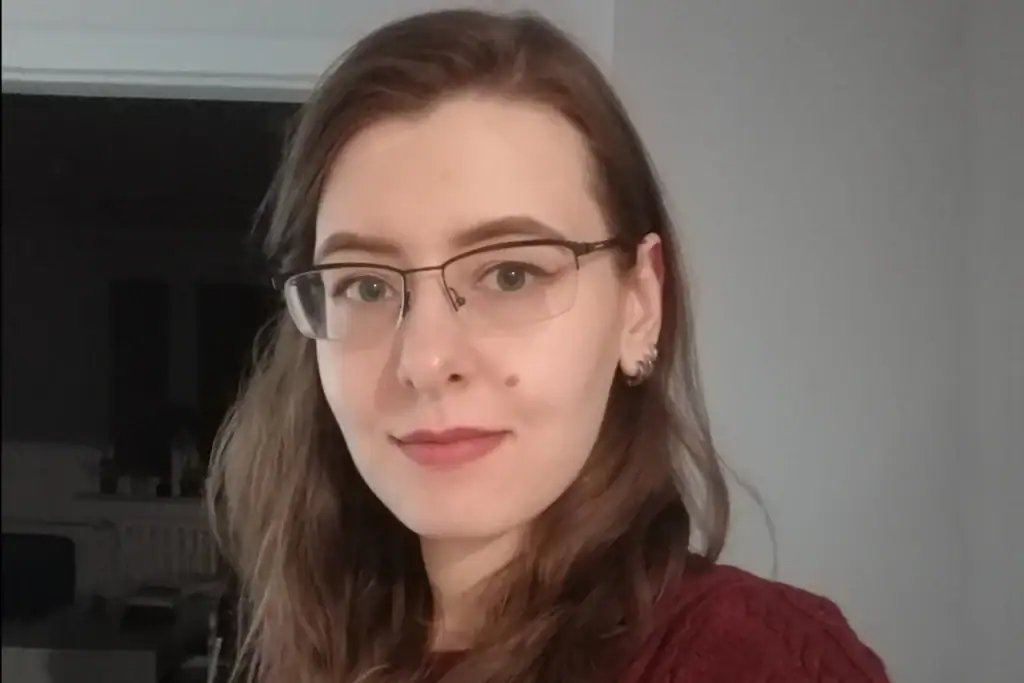
Jeff is the CEO of Starlight Runner Entertainment, a New York production company, and one of the best-known experts in the world on franchise design, transmedia worlds and narrative architecture. He has worked with some of the biggest entertainment brands on the planet, and now describes his role as a franchise and narrative systems architect. Which is the polite way of saying: he does not just think about stories. He thinks about how story universes are built so they can survive, scale, evolve, and still remain meaningful. That is exactly why I wanted to talk to him. Because if the goal is not just to write a decent story but to build something that lasts, at some point the surface-level questions stop being enough.
JG
This episode's expert
Jeff Gomez
CEO of Starlight Runner Entertainment. Franchise and narrative systems architect. Works with major entertainment brands on transmedia storytelling, franchise design, and the deeper architecture that makes story worlds last.
Meaning before medium
The biggest mistake, Jeff said, is that writers often begin with the medium instead of the meaning. They say they want to write a game. Or an interactive story. Or a film. Or a franchise. And from there they start imitating the things they already know from those formats — copying structures, tones, genres, mechanics. They begin with format.
Jeff's point was that this is exactly backwards. Before thinking about interactivity, branching, platform, genre or worldbuilding complexity, the first question has to be: what are you actually trying to say? That hit me immediately. It is such a simple question, but it cuts through a lot of nonsense very quickly. If I cannot answer what my story is really about on a deeper level, then all the mechanics in the world will not save it — I am just building structure without meaning. Mechanics are expressions. They are not the soul of the work. The soul comes first.
A story world needs a philosophy, not just a map
One of the most valuable things I took from the conversation: a real story world is not just a setting. It is not lore, aesthetics, factions, or a map. It is a philosophical framework. The world has to carry an inner logic about life, conflict, morality, power, identity — whatever the core human issue is that the story wants to explore. That deeper logic shapes what kinds of choices matter, what kinds of actions feel right inside that world, and what kind of story can emerge from it.
That is why some worlds feel rich even before much has happened, while others feel empty despite endless detail. The first kind of world means something. The second kind only contains things. That distinction is huge.
Interactive freedom requires a framework
Since I am building interactive audio stories, this part was especially valuable. Jeff made a clear distinction between real interactivity and older, more mechanical forms like classic choose-your-own-adventure structures. Binary choices alone are not enough anymore. Audiences want agency — but meaningful agency. They want to feel that their choices belong inside the logic of the world. That only works if the world has a framework strong enough to hold that freedom. Otherwise interactivity becomes arbitrary.
And that is probably the clearest explanation I have heard for why some interactive formats feel exciting and others feel shallow. If there is no deeper architecture behind the available choices, the audience may have options — but they do not have meaning. Freedom without framework is not elegance. It is chaos.
The mythic field
Another idea from Jeff that stayed with me was his concept of the mythic field: the deeper emotional, thematic and philosophical identity of a story world — the thing underneath the plot, the thing that makes an IP feel like itself even as it moves across generations, formats and interpretations. In transmedia storytelling, the mythic field is what survives every adaptation.
He used Star Trek as an example. At its core, Star Trek was never just a sci-fi setting with ships, uniforms and alien species. It was built on Gene Roddenberry's belief in a more evolved humanity — capable of peace, exploration, curiosity and moral growth. Those aspirations were woven into the firmament of the mythic field. It gave the world its identity. Once creators lose touch with that deeper field, the franchise may still look like Star Trek on the surface, but something essential is gone — and audiences feel it, even if they cannot articulate why. Any writer building a world should ask: what is the mythic field of my story? What deeper truth holds this world together? What must never get lost, even if everything else changes?
Where the conversation ended: AI needs storytellers
This also reframes the AI debate. Jeff's view was not that writers should simply use AI to write faster, nor that we should panic because it will replace us. His point: storytellers now have a more important task — to help define the frameworks, values and mythic fields that AI-based worlds will operate inside. The question is no longer whether we write with AI or against AI. The deeper question is whether storytellers are willing to shape the worlds AI will help make possible. If Jeff is right, that is one of the biggest responsibilities of transmedia storytelling in the next decade.
Transmedia storytelling
What Jeff Gomez actually said
- Meaning before medium: ask what you are actually trying to say before you pick the format.
- A world needs a philosophy, not just a map — detail without inner logic is decoration.
- Find your story's mythic field: the deeper truth that must never get lost, even when everything else changes.
About Road to Rank 1
My public learning series about becoming a better writer of interactive fiction and audio stories — by talking to experts from games, books, audio, and narrative design.
More episodes

 5 Tips on Writing